"Ironside" Ivan Gregorovich
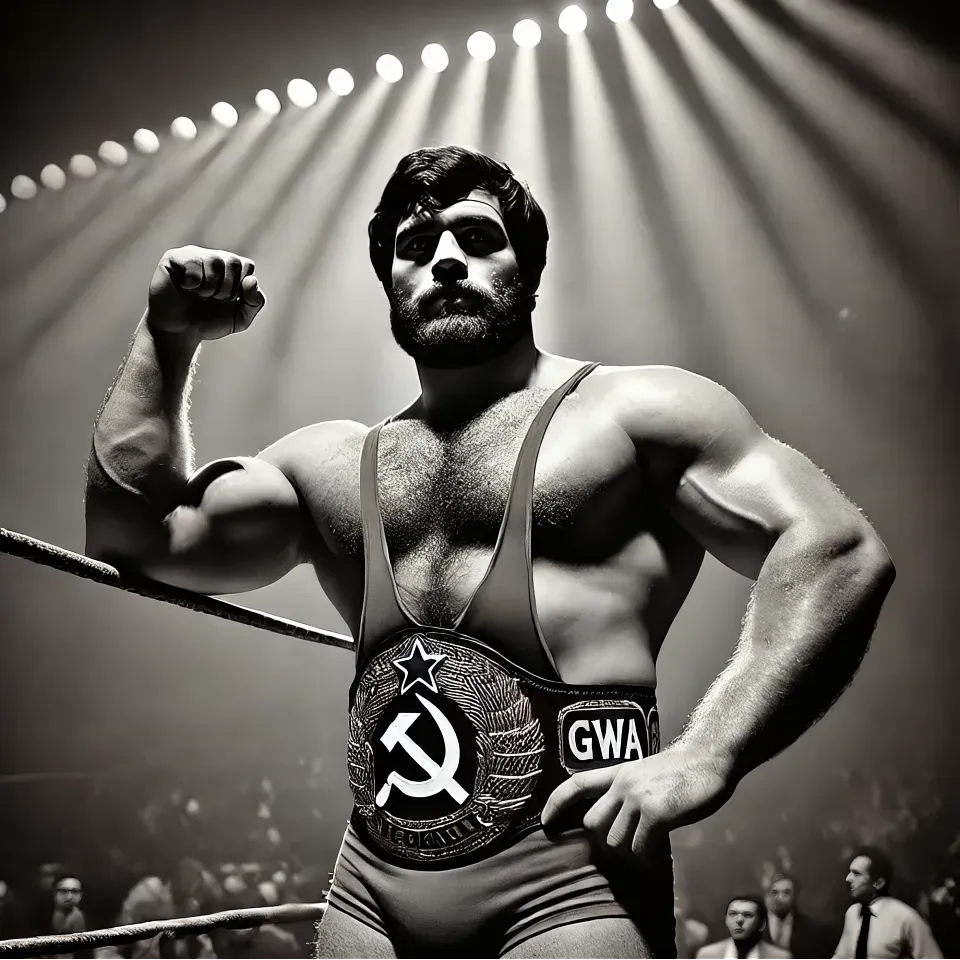
"Ironside" Ivan Gregorovich: Soviet strongman turned GWA legend. With his earth-shattering Sputnik Slam and cannon-fire entrances, this complex Cold War villain dominated the ring for two decades, captivating audiences with raw power and thought-provoking performances.

BASIC INFORMATION
Ring Name: "Ironside" Ivan Gregorovich
Origin: Volgograd, Russia
Height: 6'4"
Weight: 332 lbs. (peak); 260–270 lbs. (later career)
Finishing Move: The Sputnik Slam — hammerlock lift into a powerslam
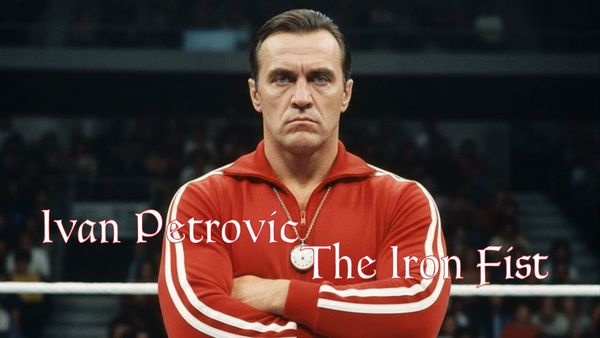
Manager: Ivan Petrovich "The Iron Fist" (1957–1977)
Years Active: October 4, 1957 – 1986
BACKGROUND
"Ironside" Ivan Gregorovich debuted in the GWA on October 4, 1957 — the same night Sputnik 1 entered orbit. He was 6'4", 332 lbs., and had nothing to say to the crowd. He didn't need to. He came from the carnival circuits of Eastern Europe, trained in a system that did not reward personality. What he brought to the GWA was simple: he hit harder, he held longer, and he refused to stop when the referee asked.
For the next twenty years, that was enough.
What the crowds never knew was that "Redwoods" Jack Carson — the GWA's founder — had personally cleared Gregorovich's debts before the promotion opened. Gregorovich repaid that debt the only way he knew how: by showing up, by staying, and by making every building he wrestled in worth the ticket price. The animosity between them on television was real heat built on real history. None of it was ever explained publicly. It didn't need to be.
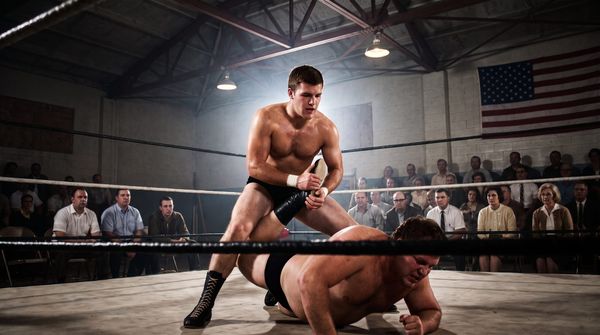
Managed by Ivan Petrovich and presented as the GWA's embodiment of Soviet power, Gregorovich demolished American fan favorites with disciplined brutality — holds held past the bell, attacks that continued after referees intervened, promos delivered with the flat certainty of a man who had never once entertained the possibility of defeat. The GWA's Cold War audiences understood exactly what he represented. They came to every show hoping to see him beaten.
His most infamous moment came at The Great Rail Rumble in 1962. After defeating Sam Frontier, Gregorovich tore an American flag in half in the center of the ring. He then walked to the back without acknowledging the reaction. The moment became one of the defining images of the Frontier Era.
By the mid-1970s, he had grown tired of the arrangement. The Soviet presentation was a tool the promotion used as much as it was a character he inhabited, and when The Baron attempted to redirect that tool toward his own ends, Gregorovich recognized it immediately. In 1977, mid-promo, he tore the hammer-and-sickle from his singlet, dropped it on the canvas, and left the arena. He gave no explanation to the press, the office, or the locker room.
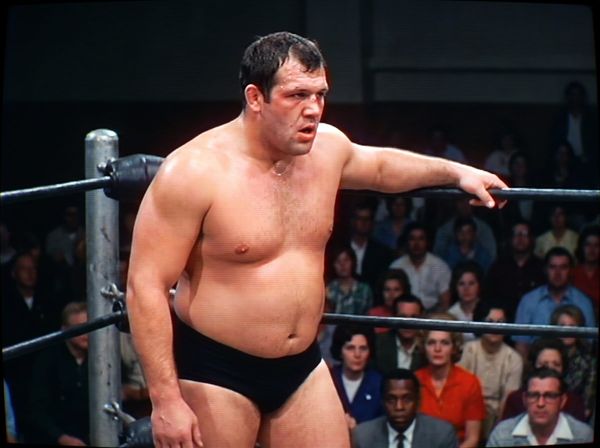
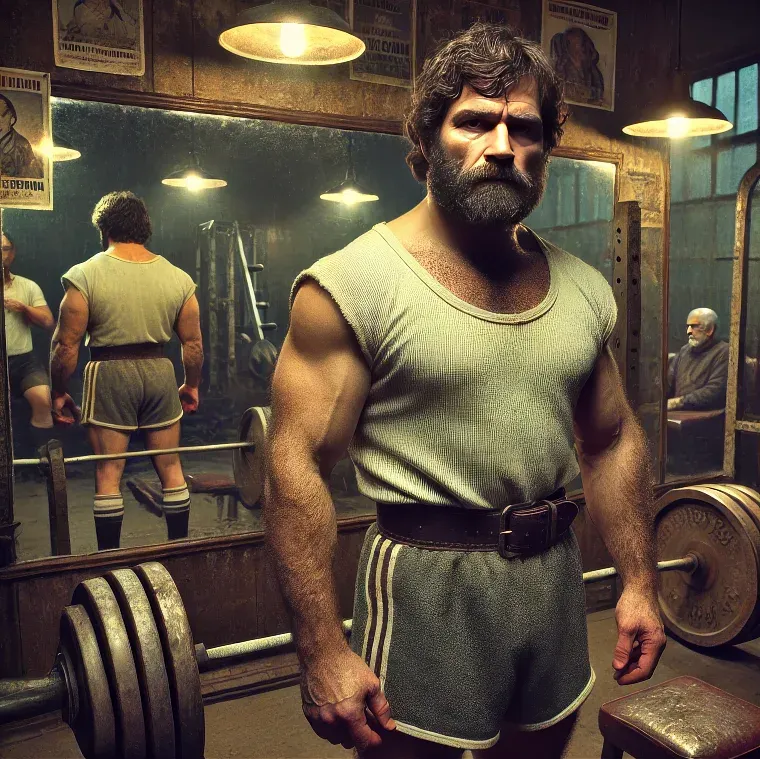
His final period in the GWA — 1981 to 1986 — was the gray tank top years. No ideology. No manager. No theatrics. He showed up, he worked, and younger wrestlers who tried to run through him learned why that was a mistake. His last major match was against his son Nikolai at Showdown Spectacle '86. He lost. He didn't protest the result.
RING STYLE
Power wrestling. Slow, deliberate, designed to grind. Gregorovich worked without flash and without urgency — he made opponents earn every offensive sequence and took them away the moment he decided the lesson was over.
Signature Moves:
- The Russian Winter — bear hug submission
- The Siberian Spike — double axe handle from the top rope
- The Russian Sickle — running lariat
Finisher: The Sputnik Slam — hammerlock lift into a powerslam. Named for the satellite. Designed to end matches without ambiguity.
APPEARANCE
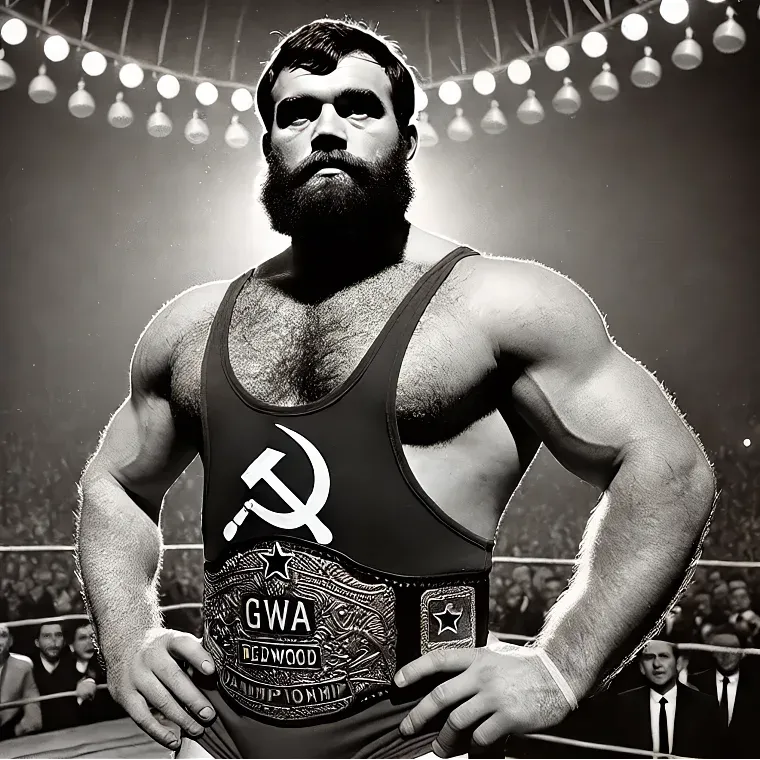
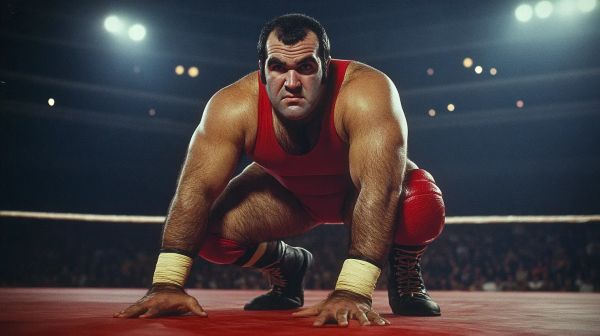
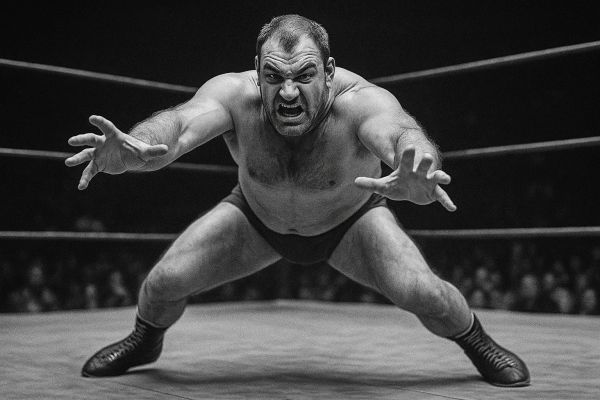
1957–1975: Deep red singlet with Soviet insignia, black lace-up boots, disciplined black beard. 332 lbs. at peak. Entered slowly. Never looked at the crowd.
1976–1980: Plain black trunks, gold iron sigil, dark sunglasses on the entrance. Hair longer. Around 280 lbs. Promos shorter and less ideological — he was working something out and doing it in public.
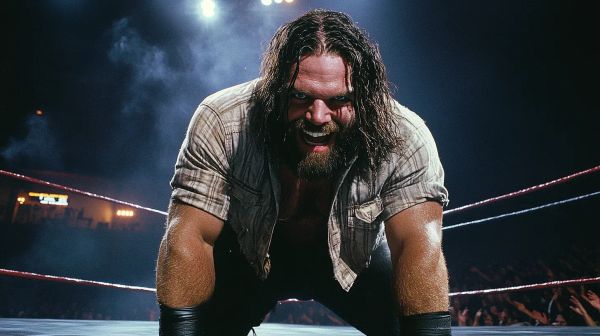
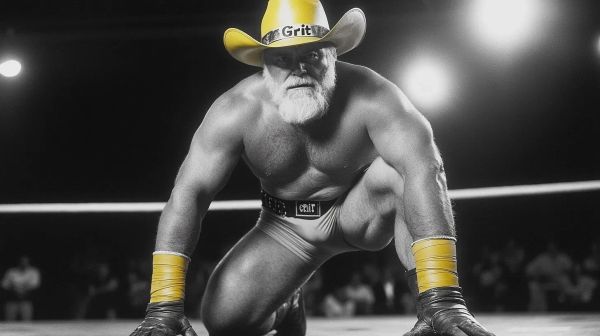
1981–1986: Faded gray sleeveless tank top, high-waisted athletic shorts, leather weight belt. Hair gray. Beard full. Around 260–270 lbs. No symbols. No performance.
CHAMPIONSHIPS
- GWA World Heavyweight Championship — three reigns (1965–1966, 1966–1967, 1969–1970)
- GWA Redwood Championship — inaugural champion, 1960
- GWA Tag Team Championship — with "Steel Hammer" Hank Roberts as The Iron Alliance
NOTABLE FEUDS
Miguel "Rio Grande" Ramirez — Four World Heavyweight Championship exchanges between 1965 and 1970. The rivalry built the GWA's top title from a regional championship into the promotion's defining prize. Neither man gave the other anything clean.
"Redwoods" Jack Carson — Public hatred built on private history. They traded the World Heavyweight Championship and headlined events across the territory for years. Crowds never knew what was underneath it.
The Baron — A brief alliance in the mid-1970s that ended when Gregorovich identified the structure he was being placed inside and refused it. One of the few times the GWA locker room saw him act on something other than professional obligation.
Nikolai Gregorovich — His son. Trained to his father's standards, which meant trained to believe nothing he accomplished would be sufficient. The feud ended at Showdown Spectacle '86.
SIGNATURE MATCHES
The Great Rail Rumble (1962) — Defeats Sam Frontier, tears an American flag in half. Leaves without comment.
May Day Massacre, Portland (May 1, 1966) — Defeats "Redwoods" Jack Carson for the GWA World Heavyweight Championship. Carson required medical attention. Gregorovich placed a Soviet flag across him before leaving the ring.
El Paso (October 18, 1969) — Third World Heavyweight Championship reign begins. Post-match promo: "For 990 days, I studied every move, every counter, every breath. The experiment is over."
Showdown Spectacle '86 — Ivan Gregorovich vs. Nikolai Gregorovich. He loses.
LEGACY
"Ironside" Ivan Gregorovich was the GWA's primary villain for two decades and, after 1977, something harder to categorize. He held the World Heavyweight Championship three times. He was the inaugural Redwood Champion. He worked the GWA's first night and its last significant era. His son Nikolai held the World Heavyweight Championship in 1984 and again in 1989.
He was active in the GWA from October 4, 1957 to 1986 — twenty-nine years.